Welcome to ‘Crazy for ConTech’ with Bradley Austen, a Q&A focused on the Construction Technology Industry.
This Q&A series is an opportunity for our ConTech Senior Consultant, Bradley Austen to discuss all things construction technology with key players who are championing innovation and digitalisation in the construction space.
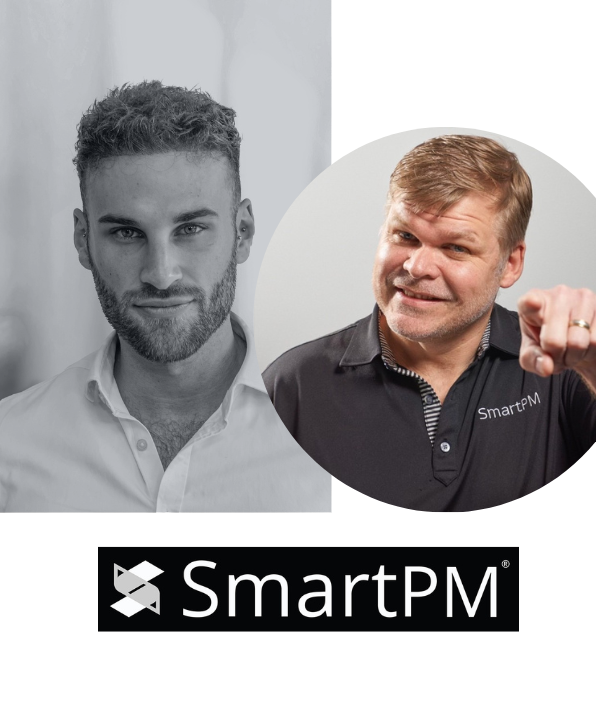
This week we have been in touch with Michael Pink, CEO at SmartPM.
SmartPM is an AI-powered project controls and schedule analytics platform for construction. It delivers automated insights, dashboards, and reports to improve accuracy, predict outcomes, and keep projects on track. Cloud-based with unlimited users, SmartPM scales easily and keeps all stakeholders informed while reducing risk.
You’ve worked at FTI, Deloitte, KPMG… what led you from professional services to construction technology?
To be honest, I found the work to be, well, boring. It was interesting to learn how to analyze project data to help organizations, but the amount of time and effort it took was cumbersome and monotonous.
I had a standard process for analyzing construction data: grab the schedule, look at it, understand it. After years of doing this, I started to see a lot of problems and pitfalls. The data itself often had breakdowns that made it hard to analyze. But even more importantly, by the time I finished my analysis – sometimes two to three months after the issue occurred – it was almost counterproductive. I was explaining what happened three months ago, while new problems had already surfaced.
It felt like I was always playing catch-up with the data, and I could never really catch up. Not to mention, very few people knew how to do this work at the level I was doing it. I saw an opportunity to automate these processes because the way I was doing the analyses was becoming pretty standard. There were things I couldn’t even get to because of time constraints or lack of computing power, but if I could, it would have been much more helpful to my clients.
So, not only were my analyses delayed, making it hard to be proactive, but I also realized that this process fed into disputes. People couldn’t keep up with the data, made assumptions, and then argued over it. That’s when I saw that the only real solution was to create technology that could automate this analysis, do it in real-time, and make everything visible to everyone – in terms they could understand. That way, projects could stay on track and avoid ending up in court.
What’s your secret sauce to success? Any advice you’d give to aspiring entrepreneurs or innovators in the ConTech space?
The first, and probably the hardest, lesson I learned is that until you fully connect with your target customer base – or even people surrounding the problem you’re trying to solve – you don’t truly understand their pain. You might have an idea of the problem and how to solve it, but you won’t really grasp it from your customer’s point of view. Nor will you know how they want it solved. That was lesson number one for me. You have to be thoughtful in your approach, but more importantly, be willing to listen to hundreds of people connected to the problem to make sure you’re not wearing blinders about how it needs to be solved. And even beyond that, you need to confirm that it’s actually a problem your customers are willing to pay to fix. That was something we had to learn.
Otherwise, you might create something you think is right, but it might not be – and that’s a waste of your time, energy, and probably a lot of money.
The second thing I’d say is don’t give up. It’s hard, and if you quit, that’s the end of it. You have to be willing to put everything into getting it off the ground. And if you really believe in your idea and you’re passionate about it, even in the toughest times, you have to keep going – especially if you’ve properly vetted your product.
The third part of the secret is surrounding yourself with people who are just as passionate and dedicated as you are. They need to be willing to put in everything they’ve got, too. As a leader, it’s your job to motivate them, give them the autonomy to think creatively, and empower them to help build the business.
Lastly, I’ve found that not taking too much money upfront can actually be a good thing. When you’re forced to figure out how to be a profitable business, instead of just spending a lot of money you’ve raised, it makes you face the real challenges and find sustainable solutions. Limiting resources forces you to think strategically and helps you build a more stable company in the long run.
What’s the biggest challenge/mistake you’ve learned from in a business setting?
I’d say the biggest challenge we faced was thinking we were right. We didn’t do enough customer discovery. It’s not that I wasn’t told to do it – I was told a million times – but I thought I knew what I was doing. And because of that, we ended up burning through a lot of cash upfront, building a product that wasn’t marketable. That was probably the biggest hurdle to overcome.
How integral do you see VC investment/support to the success of a start-up?
During the growth stage, I think VC investment is crucial. If you want to scale your solution and become a known player in the industry, growth investment is key. However, I don’t believe VCs are essential in the early days. As I mentioned before, you need to feel the pressure to solve the problem yourself, and taking on VC investment too early can actually create more issues.
One of the other things I’ve learned is that you need to find a VC who truly understands your industry, your product, and the value you provide. If you partner with a VC who doesn’t get it, it can lead to problems in decision-making, especially at the board level.
What does diversity, equity, and inclusion mean to you? What value does it bring to you and your team?
Diversity is critical. Having people from different backgrounds and perspectives working together allows us to approach problems from every angle. It helps us make more well-rounded decisions as a business by ensuring we’ve considered multiple viewpoints. So, for me, diversity is about making sure we look at challenges from all sides.
As for equity, I think it’s about creating buy-in. It’s important that people are truly invested – not just financially, but in the vision and future of the business. We’ve learned from our own team that employees need to feel like they are on a journey with us. If they’re not aligned with the mission or don’t see personal growth in the experience, they end up just collecting a paycheck. Especially in the early days, you need people who aren’t just here for the money but for the experience, the challenge, and the vision.
Inclusion is about making sure everyone’s voice is heard. It’s not just about involving people but actively listening to their ideas and incorporating those ideas into decisions. Bringing their contributions to life is a key part of building a strong, engaged team.
Tell us about SmartPM’s approach to talent acquisition and culture? Has it changed since you first founded the company?
Yes, it has changed. When we first started the company, we thought it made sense to hire people with experience – people with great resumes who could teach us things we didn’t know since we were new to building a business. But we quickly learned that the number one driver of our culture is grit and excitement about the journey, not necessarily experience.
Now, we focus on finding creative, outside-the-box thinkers who are committed to continuous improvement. We’ve found that these qualities matter more than years of experience. When we prioritize these traits in the hiring process, we end up with dedicated, hardworking employees who are aligned with our mission. They’re not just here for a paycheck – they’re here for the experience and the opportunity to grow. They’re more open to building relationships among the people they work with, and this has created an amazing culture.
What’s the biggest opportunity and challenge that you see the ConTech space facing over the next 5 years?
The biggest challenge is that there are about 5,000 different products out there, all offering pointed solutions for specific areas. This creates a major problem for decision-makers because it’s overwhelming to evaluate so many options. It has forced companies to create innovation centers, which I think is smart, but it also makes it very time-consuming and difficult for the people who are actually building projects to test all these tools.
For companies developing products, this crowded market makes it hard to penetrate. That’s why it’s critical for any organization building a product to thoroughly understand its value, its customer, and how to properly deploy and support its solution across multiple areas – not just one niche.
Looking ahead, I think we’ll see some quasi-conglomerates of these pointed solutions start to form, and there will likely be a wave of acquisitions by larger project management platforms. However, the ongoing challenge will be getting companies to fully understand what’s out there, how these solutions fit together, and how they can be integrated into a cohesive system.
Choosing your leadership team – I know you’ve got a brother in the ranks. What criteria do you follow to ensure you’re surrounded by people who can tee SmartPM up for success?
One of the key things we realized is that there needs to be alignment in how we view the business. My approach is driven by data. So, the leaders we bring on board must be fully bought into the idea that data is how we make decisions. It’s not just about saying, “My experience tells me this” – decisions need to be supported by the data we capture, and that data needs to be visible and understood by everyone. That’s what we sell, and it’s how we operate.
When we’ve hired leaders who rely more on gut feeling than data, we’ve seen a lot of disconnects in decision-making. That’s why we have a standardized set of data and metrics that everyone must understand and use. It makes decision-making more objective and creates better discussions.
Another important criterion is a willingness to listen and share. We have a policy here that everyone can speak up, and we genuinely listen. We don’t brush off ideas, but again, if those ideas aren’t backed by data or if the data shows something won’t work, we have to respect that. There are no egos in this process.
Growth plans for SmartPM: 6 months, 1 year, 3 years (i.e: geographies, products, verticals, hiring, funding
Our goal is to expand beyond our initial focus as a schedule controls platform. We started with schedule controls because it’s the most complex and critical problem we could solve, and it forms the foundation of project controls. Over the next few months and years, we’ll be broadening our service offering into a more comprehensive project controls platform by layering in additional data sets like cost, resources, project management data, correspondence data – essentially, any data we can gather. We’ll also be automating more of the project control functions as we go.
In terms of markets, we’ll continue to serve both the contractor and owner sides, with potential expansion into insurance, especially through benchmarking. We’re leveraging AI to analyze our data, helping to drive better decisions, and soon, we’ll use this technology to provide recommendations based on our vast dataset of construction projects.
Right now, we serve both the large contractor community (ENR 400) and the middle market, but we’re aiming to move more into the owner’s side to foster better collaboration between all parties. Listening to our customers is a big part of our growth strategy – when they share a pain point or a new idea, we incorporate it into our product roadmap.
As we evolve, our product will expand to cover different data sets and analytics, providing full project control support. But we’re also flexible and open to where customer feedback takes us, so while we have a clear plan, we’re also open to the unexpected opportunities that arise.
What is your favourite quote? If you could have dinner with any two famous people, dead or alive, who would you choose?
For my favorite quote, I’d go with one from Rocky:
“It’s not about how hard you can hit. It’s about how hard you can hit and keep moving forward.”
As for dinner – I think Slash from Guns N’ Roses would be pretty cool to have dinner with. He’s mastered the guitar, been through a lot, and come out on the other side. Now, he’s touring the world sober and living a good life. I think he’d be a fascinating person to get to know.
The other person would be Elon Musk. I’d love to pick his brain. He’s a visionary, always pushing boundaries, and I find his approach to innovation really interesting – especially with Tesla and SpaceX. He’s a forward thinker, and while I admire that more than what someone like Bezos has done, I also think Steve Jobs would have been great to meet. He had a lot of the same qualities – very passionate about his ideas, always thinking ahead, and focused on solving problems for the customer. Plus, I liked how he made it a point to get to know everyone in his organization and kept his finger on the pulse of what was happening.
LMRE are specialist PropTech recruiters, if you need help growing your business or making any key hires please get in touch via the form below!


"*" indicates required fields